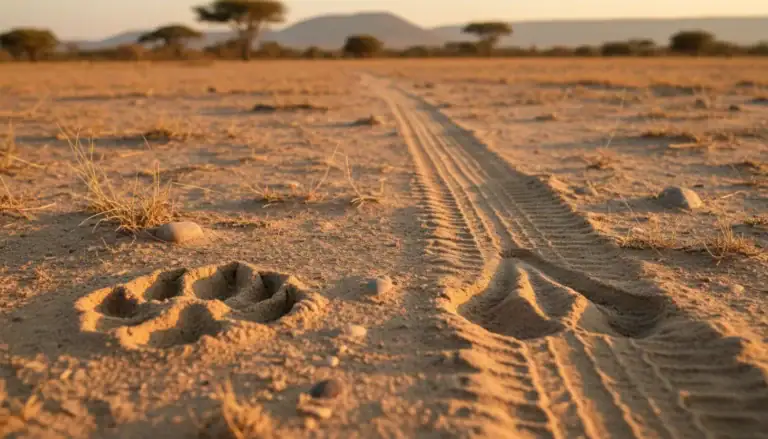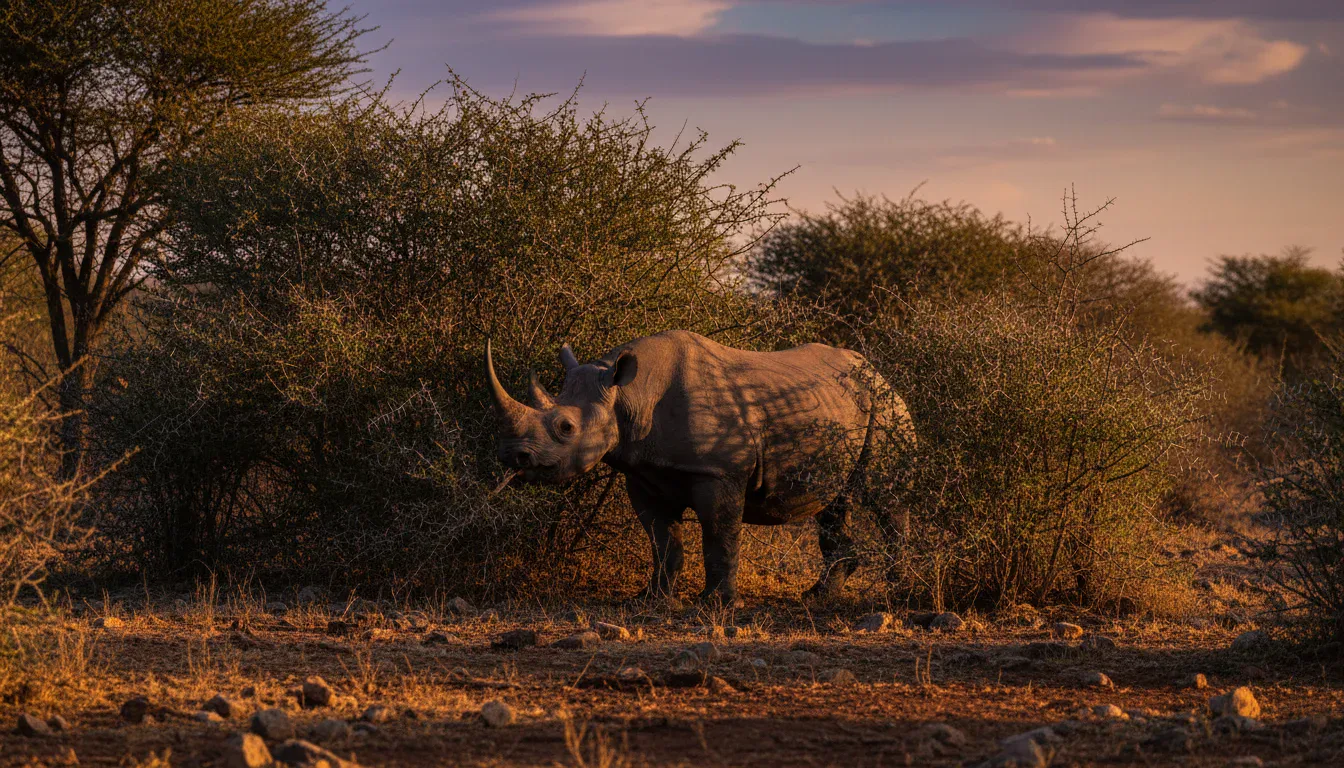
“Tracking differences between black and white rhinos stem from habitat selection and diet. Black rhinos are solitary browsers inhabiting dense thickets, leaving smaller, heart-shaped spoor. White rhinos are social grazers found in open grasslands, leaving larger footprints and communal dung middens.”
Key Takeaways
- Dietary Adaptations: Black rhinos possess hooked lips for browsing shrubs; white rhinos feature wide, square lips for grazing grass.
- Habitat Preferences: Black rhinos favour dense acacia scrub; white rhinos frequent open plains and waterhole clearings.
- Spoor Characteristics: White rhino tracks are larger with a flat rear pad, while black rhino footprints show a distinctive heart-shaped heel impression.
- Social Structures: White rhinos gather in social groups (crashes), whereas black rhinos remain largely solitary and elusive.
The primary difference between tracking black rhinos and white rhinos on a game drive lies in their habitat preferences and behavioural traits. Black rhinos are solitary browsers that inhabit dense bush areas, making them challenging to spot. White rhinos are social grazers that prefer open grasslands, where they are more visible and frequently seen in groups.
A rhino’s diet directly dictates where trackers look:
- The Black Rhino: Adapted with a hooked upper lip to clip twigs and shrubs, this species frequents thick vegetation and thorny scrub.
- The White Rhino: Features a broad, square lip designed to graze lawn grasses, drawing it to grassy floodplains, pan margins, and waterholes.
Field guides also distinguish the two species by their spoor:
- Footprints: White rhino tracks are noticeably larger with a rounded back pad. Black rhino tracks are smaller and display an indented, heart-shaped heel.
- Dung Markings: White rhinos build large communal dung heaps (middens) containing fine grass fragments. Black rhinos leave smaller deposits filled with woody twigs cleanly clipped at a 45-degree angle.
Conservation Status & Anti-Poaching
Understanding these two species is vital for global conservation. Global populations of white and black rhinos stand at roughly 15,700 and 6,700, respectively. While persistent protection has allowed black rhino numbers to increase gradually from severe historic lows, both species remain under severe pressure from illegal wildlife trade.
Madikwe Game Reserve serves as a key sanctuary for rhino conservation in South Africa. Through sophisticated ground patrols, continuous perimeter surveillance, and advanced tracking technology, reserve management works tirelessly to protect both species in their natural habitat.
Experiencing Rhino Tracking at Rockfig Madikwe
Guests at Rockfig Madikwe can observe these distinct tracking dynamics firsthand during morning and afternoon game drives. Guided by knowledgeable field guides in open safari vehicles, guests learn to read the subtle signs of the bushveld, from fresh spoor on sandy tracks to distant calls across the plains.
Between drives, guests can observe wildlife while relaxing by the pool or visiting the 24-hour underground hide overlooking an active waterhole.